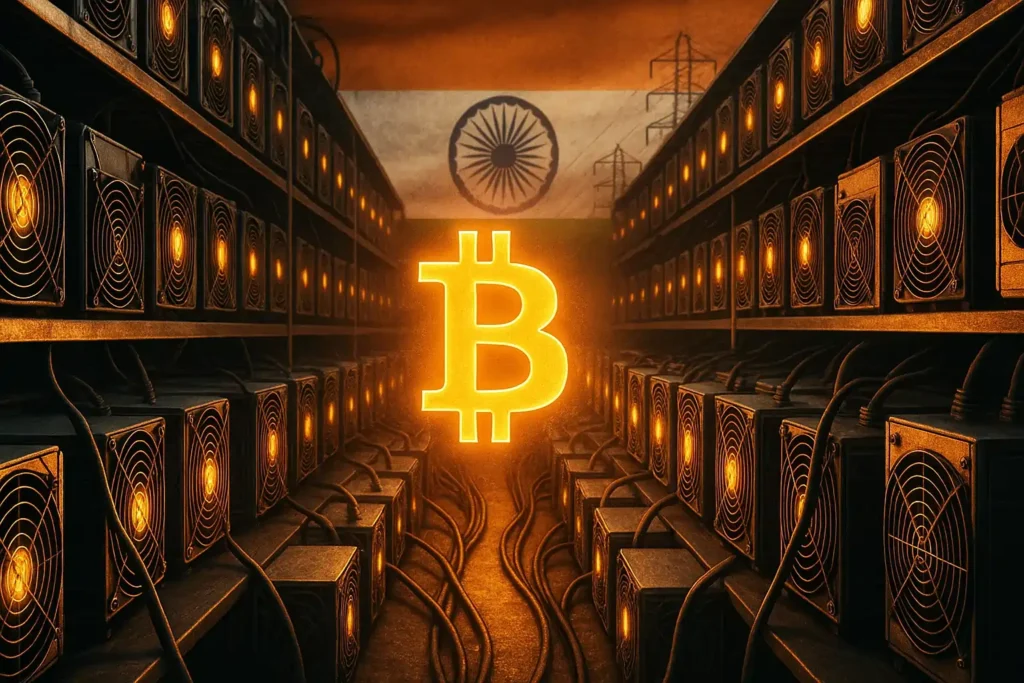
Let’s be honest — the first time most people hear “coin mining,” they picture a room full of loud fans, blinking lights, and electricity bills that would make your landlord faint. And honestly? That image isn’t entirely wrong. But it’s also missing the full picture.
Coin mining — or cryptocurrency mining — is the backbone of many blockchain networks. It’s how new coins enter circulation, how transactions get verified, and how decentralized trust actually works without a bank in the middle. Whether you’re a curious beginner or someone seriously evaluating mining as a side hustle (or even a full-time play), this guide is built for you.
We’ll walk through the mechanics, the hardware, the profitability math, the risks, and where mining stands in 2026 — all without the jargon overload.
📋 Table of Contents
⛏️ What Is Coin Mining?
At its core, coin mining is the process by which new cryptocurrency transactions are verified and recorded on a blockchain — and in return, the miner who does the work receives a block reward in the form of newly created coins.
Think of it like this: imagine a giant public notebook (the blockchain) where every Bitcoin transaction ever made is recorded. Miners are the people who write new entries in that notebook — but before they can write anything, they have to solve a complex mathematical puzzle. The first one to solve it wins the right to add the next “page” (block) and gets paid in Bitcoin for their effort.
This system is called Proof of Work (PoW), and it’s what powers Bitcoin, Litecoin, Monero, and several other major cryptocurrencies. It’s competitive, energy-intensive, and — when done right — genuinely profitable.
Bitcoin’s creator, Satoshi Nakamoto, mined the very first block — called the “Genesis Block” — on January 3, 2009. The reward was 50 BTC. At today’s prices, that single block reward would be worth millions.
🔬 How Does Mining Actually Work?
Here’s the simplified mechanics, without the PhD-level cryptography:
When you send crypto to someone, that transaction is broadcast to a global peer-to-peer network of computers (nodes). It sits in a pool of unconfirmed transactions called the mempool.
Miners pick up these pending transactions and group them into a candidate block. They also prioritize transactions with higher fees — which is why your Bitcoin transfer might sit pending if you chose a low fee.
Miners race to find a special number called a nonce that, when added to the block data and run through a cryptographic function (SHA-256 for Bitcoin), produces a hash starting with a specific number of zeros. This is pure trial-and-error, billions of attempts per second.
The first miner to solve the puzzle broadcasts the completed block to the network. Other nodes verify the solution (verification is instant), and the block gets added to the chain. The winning miner collects the block reward + transaction fees.
For a deeper dive into how blockchain technology works in real life, check out our piece on real-life moments when blockchain saved nations from disaster — it puts the power of this tech in perspective.
🗂️ Types of Crypto Mining
Mining isn’t one-size-fits-all. Different setups suit different budgets, goals, and technical comfort levels.
Solo Mining
You mine alone. All rewards go to you — but the chances of solving a block solo with consumer hardware are astronomically low. Think lottery-level odds.
Pool Mining
Miners combine their hash power. When the pool wins a block, rewards are split proportionally. Smaller, more consistent payouts. This is what most miners do.
Cloud Mining
You rent hash power from a remote data center. No hardware, no electricity management. But margins are thin and scam risk is high — research extremely carefully.
Mobile Mining
Apps like Pi Network let you “mine” from your phone. Practically speaking, these are participation-based systems, not real PoW mining. Low risk, but also very low reward.
👉 Curious about Pi Network specifically? We covered how to get Pi Coin in India — worth a read if mobile mining interests you.
🔧 Mining Hardware: GPU vs ASIC vs CPU
Your hardware choice is everything in mining. It determines your hash rate, your electricity consumption, and ultimately whether you profit or bleed money. Here’s how the three main options compare:
| Type | Best For | Cost Range | Power Usage | Verdict |
|---|---|---|---|---|
| CPU | Monero (XMR) | Already have it | Low | Niche Only |
| GPU | Ethereum Classic, Ravencoin | ₹25,000 – ₹1,50,000+ | Medium-High | Flexible |
| ASIC | Bitcoin (SHA-256) | ₹1,50,000 – ₹10,00,000+ | Very High | Serious Miners |
ASICs (Application-Specific Integrated Circuits) are purpose-built mining machines — incredibly efficient but inflexible. An Antminer S21, for example, runs at around 200 TH/s but consumes ~3500W. These are the weapons of industrial miners.
GPUs are the flexible middle ground. A rig of 6-8 high-end GPUs can mine various coins and be repurposed for gaming or AI workloads if mining stops being profitable. According to Investopedia, GPU mining rigs remain the entry point of choice for hobbyist miners globally.
CPUs are practically useless for Bitcoin, Ethereum Classic, or any major coin today. The only exception is Monero (XMR), which is intentionally designed to resist ASICs and remain CPU-mineable — a deliberate choice for decentralization.
💰 Is Coin Mining Still Profitable in 2026?
Short answer: It depends entirely on your electricity rate. If you’re paying over ₹8/kWh in India, Bitcoin mining with consumer hardware is almost certainly a losing proposition right now. But that doesn’t mean mining is dead — it means you need to be strategic.
The Bitcoin halving of April 2024 cut the block reward from 6.25 BTC to 3.125 BTC. This means miners earn less BTC per block — but historically, halvings have been followed by significant price appreciation that restores (and often increases) miner revenue in USD terms. We broke down the full context of Bitcoin’s price boom if you want the macro picture.
Use tools like NiceHash Profitability Calculator or WhatToMine to plug in your specific hardware and electricity cost before investing a single rupee.
🇮🇳 Mining in India: What You Should Know
⚠️ Legal Status
Cryptocurrency is not banned in India, and mining is currently legal. However, crypto is subject to a 30% flat tax on profits and a 1% TDS on transactions above certain thresholds. Consult a CA familiar with crypto taxation before scaling your operation.
India presents a uniquely challenging environment for mining because of high electricity rates in most states (₹6–₹9/kWh average). Industrial mining at scale requires access to cheaper power — which is why miners in states with hydro or cheaper grid access (like Himachal Pradesh) have a structural advantage.
We went deep on this topic in our complete guide to crypto mining profitability in India — including real electricity cost breakdowns by state, equipment import duties, and what coins make the most sense for Indian miners right now.
According to the International Energy Agency (IEA), Bitcoin mining consumes roughly 100–150 TWh annually worldwide — a figure that has prompted regulatory scrutiny globally, including discussions in India’s parliament.
🚀 How to Start Mining: Step-by-Step
Ready to actually get started? Here’s a realistic checklist — skipping none of the boring-but-essential stuff:
Step 1: Pick Your Coin
Don’t start with Bitcoin unless you have ASIC hardware. For GPU miners, consider Ethereum Classic (ETC), Ravencoin (RVN), or Alephium (ALPH). For CPU miners, Monero (XMR) is the go-to.
Step 2: Get Your Hardware
Buy from reputable sources. For GPUs, compare Nvidia RTX 4060/4070 vs AMD RX 7700 XT. For ASICs, Bitmain’s Antminer series and MicroBT’s WhatsMiner are industry standards. Check for Indian import duties.
Step 3: Set Up a Wallet
You need a wallet address to receive mining rewards. Use a non-custodial wallet — Exodus for beginners, or hardware wallets like Ledger for serious amounts. Never mine directly to an exchange wallet.
Step 4: Join a Mining Pool
For most miners, solo mining is impractical. Join a reputable pool: F2Pool, Antpool, or ViaBTC are trusted options. Compare their fee structures (typically 1–2.5%).
Step 5: Install Mining Software
Configure mining software to connect your hardware to the pool. Popular options: CGMiner or BFGMiner for ASICs, PhoenixMiner or lolMiner for GPUs, XMRig for CPU/Monero mining.
Step 6: Monitor & Optimize
Mining is not “set it and forget it.” Monitor temperatures (GPUs should stay under 80°C), hash rates, rejected shares, and power draw. Overclocking and undervolting can dramatically improve efficiency.
⚠️ Real Risks Nobody Tells You About
Mining content online is heavily biased toward success stories. Here’s the unfiltered version:
Running GPUs or ASICs at full load 24/7 accelerates wear. A GPU that typically lasts 5+ years for gaming may show issues in 2–3 years of continuous mining. Budget for replacement cycles.
You might mine a coin worth ₹5,000 today and find it’s worth ₹800 tomorrow. If you’re not converting to stable assets regularly or holding through conviction, volatility can erase profits overnight.
India’s electricity tariffs are not fixed — commercial rates can shift. A mining operation that’s profitable today can become negative ROI if rates go up by just 15–20%.
This is where most beginners lose money. Platforms promising guaranteed daily returns from “rented hash power” are almost always Ponzi schemes. No legitimate cloud mining company needs retail investors at those rates.
The regulatory landscape in India is evolving. Crypto regulation in 2026 remains a moving target globally — stay informed.
📚 Explore More on MiningMinds
❓ Frequently Asked Questions
🏁 Final Thoughts
Coin mining is real, it’s technical, and it can be profitable — but it’s not a passive income magic button. It rewards people who understand the numbers, stay on top of the market, optimize relentlessly, and don’t get swept up in hype cycles.
If you’re in India, the electricity cost math is your first and most important homework assignment. Get that right before spending a rupee on hardware.
And if you’re not quite ready to mine but still want crypto exposure, explore what’s happening in the broader market with our coverage of the explosive rise of the crypto industry — the landscape is fascinating even from the sidelines.
Covering crypto, blockchain, and digital assets with a focus on Indian markets. We break down complex topics into actionable guides for miners, traders, and curious minds.